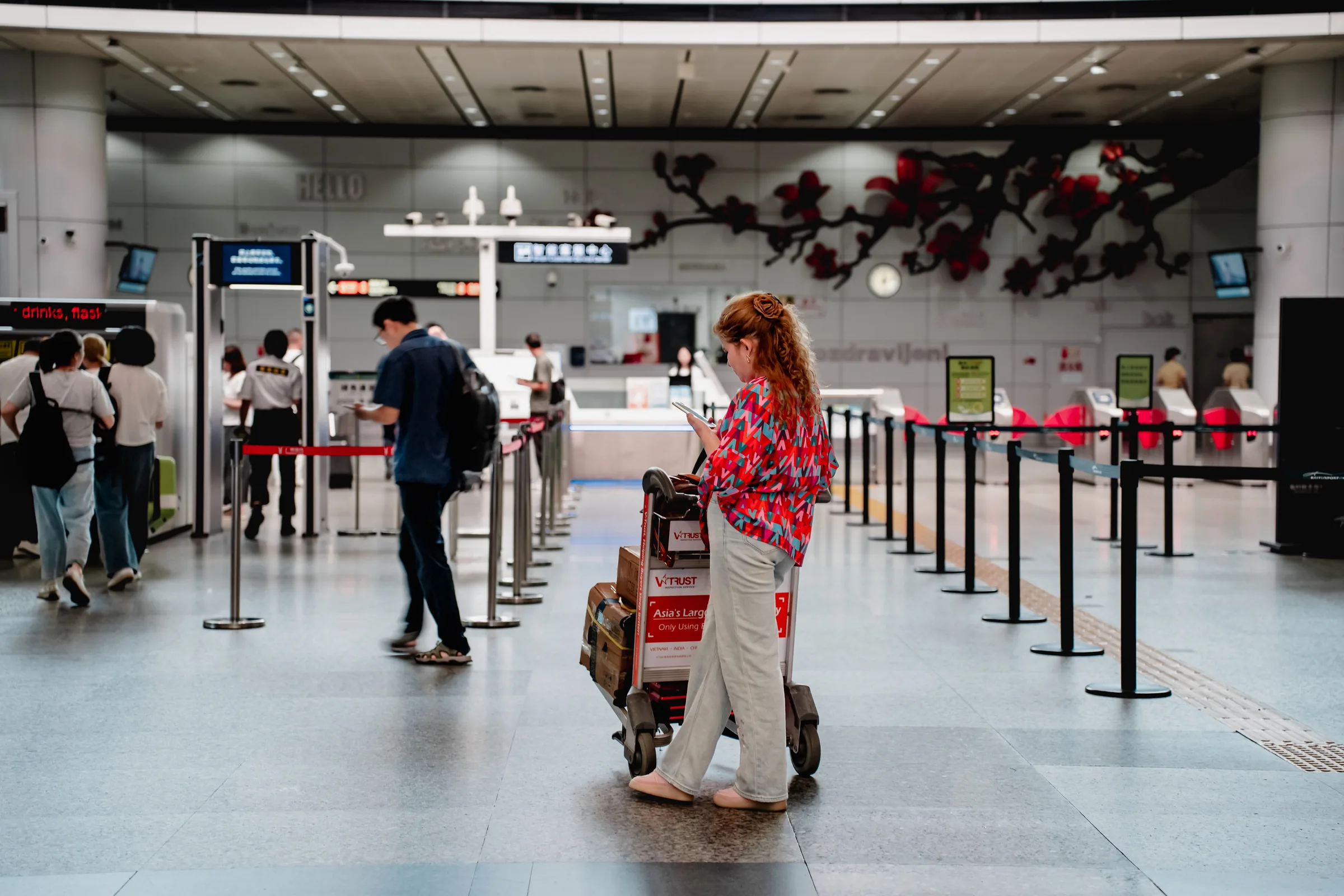
240-Hour Visa-Free Transit
240h is for listed nationalities going A → China → B via designated ports, staying in the permitted area. 24h is a short connection that usually stays in the restricted port area; leaving it needs a temporary-entry application that is not guaranteed. Port officers decide — this page does not.
Not sure? Use the entry path tool →
How 240-hour transit works
Which transit applies to you
240-hour visa-free transit
For eligible nationalities transiting to a third country/region via an eligible port. You may leave the airport and stay within the allowed area for up to 240 hours.
- Genuine A → China → B transit to a third country or region (A and B differ)
- Travel document valid at least 3 months; confirmed onward arrangements
- Entry/exit at one of 65 ports; stay within the permitted area; temporary entry formalities at port immigration inspection — port officers decide
24-hour direct transit
A short airport/port transfer, usually without clearing immigration or leaving the transit area. A different scheme from the 240-hour one.
- Connecting within ~24 hours, often airside only
- Rules and limits differ from 240-hour transit
- Confirm with your airline and border inspection
Eligible nationality, ports and stay areas are set by the official source. We do not publish a full port list here — confirm the current list on gov.cn / NIA.
Where 240-hour transit applies
Transit-free is port-restricted — entry must be through a designated port, and the area you may stay in is tied to that port.
North China
Beijing · Tianjin · Hebei region
PEKBeijing Daxing PKXTianjin TSNShijiazhuang SJWEast China
Shanghai · Jiangsu · Zhejiang · Anhui · Shandong
PVGHangzhou HGHNanjing NKGQingdao TAOHefei HFESouth China
Guangdong · Fujian · Guangxi
CANShenzhen SZXXiamen XMNGuilin KWLShow 3 more regions
Southwest
Sichuan · Chongqing · Yunnan
CTUChongqing CKGKunming KMGCentral China
Hubei · Hunan · Henan
WUHChangsha CSXZhengzhou CGONortheast & Northwest
Liaoning · Heilongjiang · Shaanxi
DLCShenyang SHEHarbin HRBXi'an XIYMajor hubs shown for orientation only. Full port list and stay-area boundaries must be verified on the official NIA / gov.cn source before travel.
Before you rely on transit-free
Transit-free is a privilege, not a right. The border officer makes the final call — verify all conditions on the official source before you book.
What a qualifying route looks like.+
It must be a genuine transit — not a round trip.+
Nationality, port and stay area must all be met.+
Hong Kong / Macao / Taiwan routings are easily confused.+
Airlines may still say "144-hour".+
No work, study, journalism, or overstay.+
Is a "China transit visa" a real visa you apply for?+
Sources
2025年全国民航航班运行效率报告 — 2025 national domestic flight on-time rate 91.09% · Reviewed 2026-07-12
交通运输部:新申请的跨省客运班线不得超过800公里 · Reviewed 2026-07-12
道路旅客运输及客运站管理规定(2023年修正版) · Reviewed 2026-07-29
240小时过境免签 — stay period calculation start time · Reviewed 2026-07-10
Source-bound facts (gov.cn / NIA / US Embassy): the 72/144-hour transit was expanded to 240 hours (2024-12-17); 55 countries eligible as of June 2025 (Indonesia added 2025-06-12, NIA); Vietnam and Kyrgyzstan were added on 2026-08-20, making 57; 65 eligible ports confirmed (US Embassy document, June 2026). Counts, ports and country lists must be re-checked on the official source before use. Last checked: 2026-08-14.